
Japanese police certificate
A Japanese police certificate, keisatsu shōmei, is required by immigration authorities in a number of countries and by some employers. Anyone who has lived in Japan may need one, whatever their nationality.
How the process runs
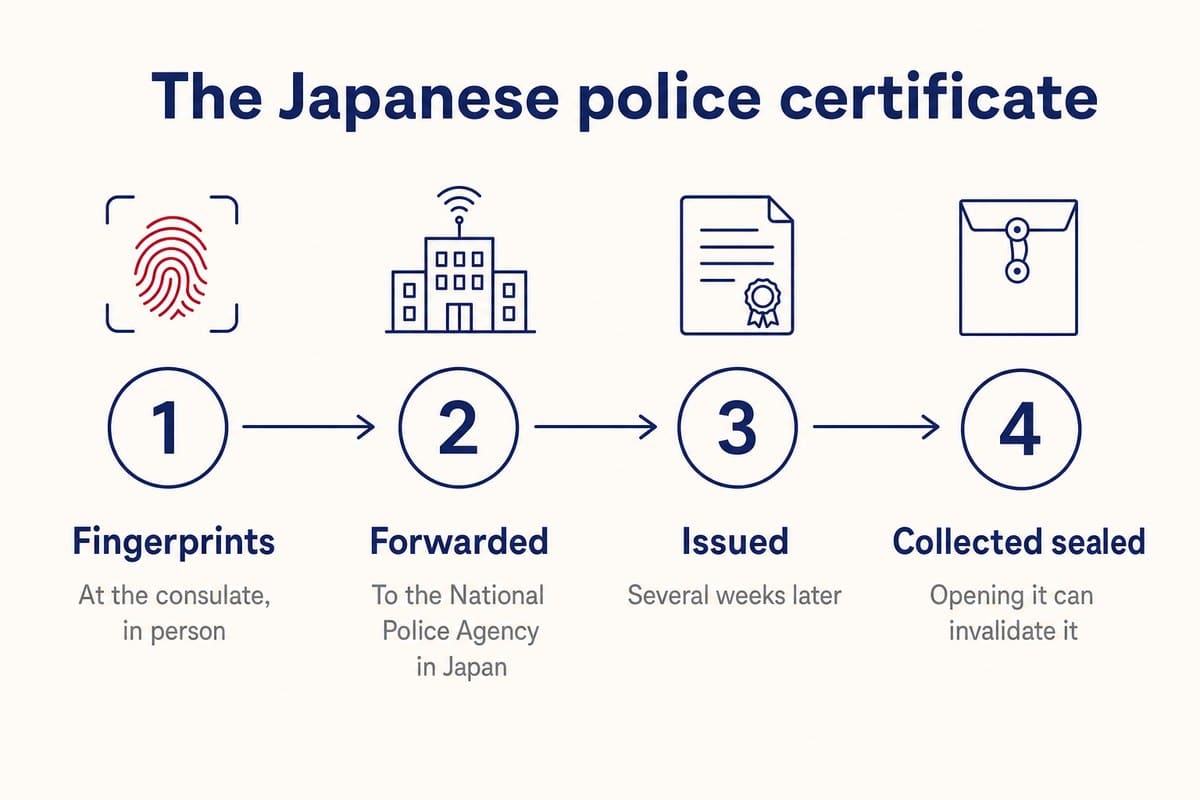
| Step | Where | Roughly |
|---|---|---|
| Fingerprints taken | At the consulate, in person | One appointment |
| Application forwarded | Consulate to the National Police Agency | Days |
| Certificate issued | Japan | Several weeks |
| Collection | At the consulate, in person | Sealed envelope |
What you need with you
Who can apply
Anyone who has resided in Japan, Japanese national or not. The certificate covers the period of that residence, and the authority asking for it usually specifies how recent it has to be.
Why immigration authorities ask for it
Countries that assess character before granting residence usually require a police certificate from every country where the applicant has lived for a meaningful period. Anyone who spent a year or more in Japan is likely to need one, whether they are Japanese or not.
Plan around the timing
Between the fingerprint appointment and the certificate arriving, count on several weeks. Immigration applications with a deadline should start with this document, not finish with it.And the certificate has a shelf life with the authority receiving it, often three or six months. Ordering it too early is as much of a problem as ordering it too late.
The sealed envelope
It arrives sealed, and many authorities require it that way. If yours accepts an opened certificate, confirm that in writing before you open it, because nobody can reseal it for you.
If you never lived in Japan
A short holiday does not create a Japanese police record and does not normally require a certificate. If an authority has asked for one anyway, ask them to confirm the period they are concerned with before you start.