
Japanese passport: apply or renew in the U.S.
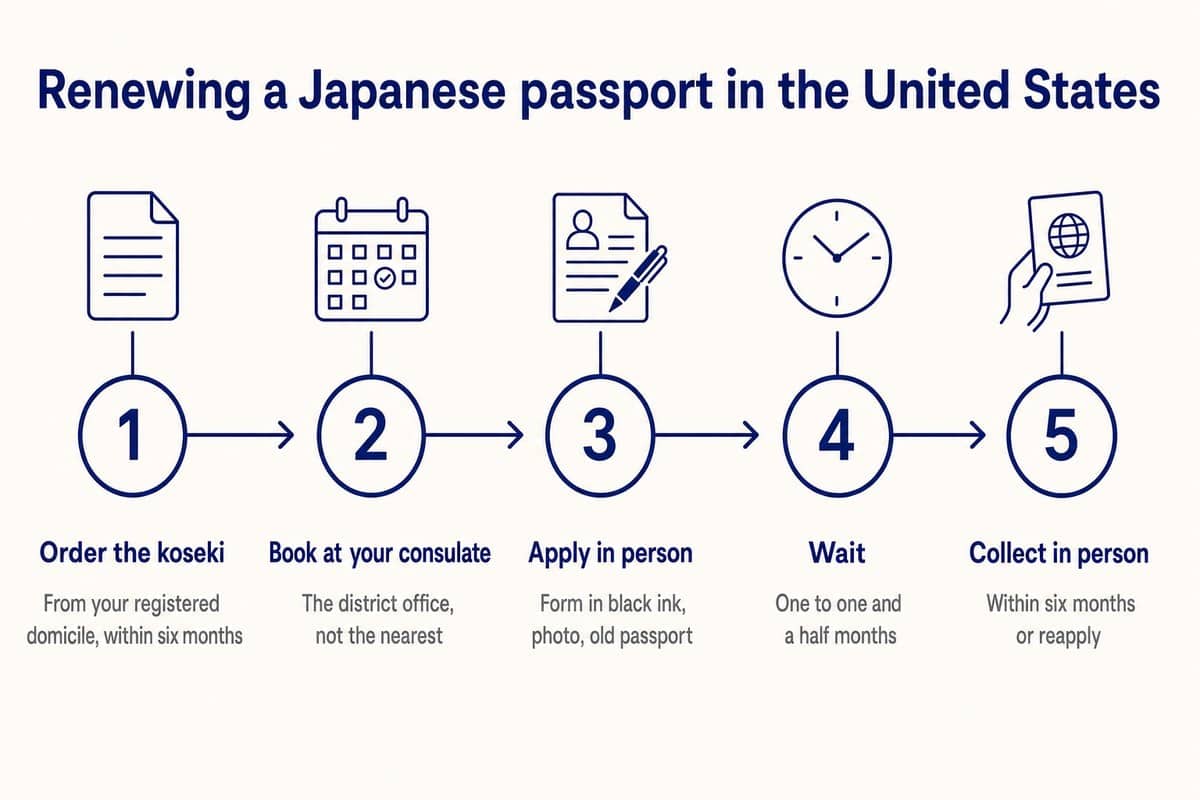
A Japanese passport is applied for in person at the consulate that covers where you live, and collected in person by the applicant. There is no postal route for collection and no proxy, whatever the circumstances.
What you take to the counter
How long it takes
The published time is about one to one and a half months. The passport is printed in Japan and shipped back, which is the part that cannot be compressed.
Three details that surprise people
The first: even a newborn applies in their own name. There is no adding a child to a parent's passport.
The second: the additional visa pages that used to be available, the zōhō, have been discontinued. If you run out of pages you apply for a new passport with the same remaining validity.
The third: the photo is where applications stall. School photographs are often refused, and so are prints made from a low-quality phone image. A photo studio is the safer route.
The koseki, and why the consulate cannot help
Where a koseki tohon is required, you have to obtain it yourself from your registered domicile in Japan. The consulate cannot request it on your behalf and has no access to locate it. That is worth starting weeks before the appointment.
Lost or stolen abroad
A lost passport is reported to the local police, and the report is part of the consular file. You then apply either for a new passport, which takes the usual month or more, or for a travel document that gets you back to Japan once.
If you are flying within days, say so at the first contact. The route for someone with a ticket next week is different from the route for someone replacing a passport at leisure.Children
Every child applies in their own name, from birth. A minor's application needs a letter of consent from a person with parental authority, and where the parents are divorced, a koseki tohon issued within six months showing custody.
A child born in the United States has to be registered on the koseki before a passport is possible at all. That registration takes a month or more on its own.
Names
The passport follows the koseki. A name that appears one way on the family register and another way on a U.S. document is reconciled by amending the register, not by asking the consulate to print what you prefer.
Adding a non-Japanese spouse's surname is a separate filing with its own deadline after the marriage, and it is one of the cases where a fresh koseki tohon is required for the passport.